
Electric vs Gas Go-Karts the Full Breakdown at K1 Speed
May 8, 2026
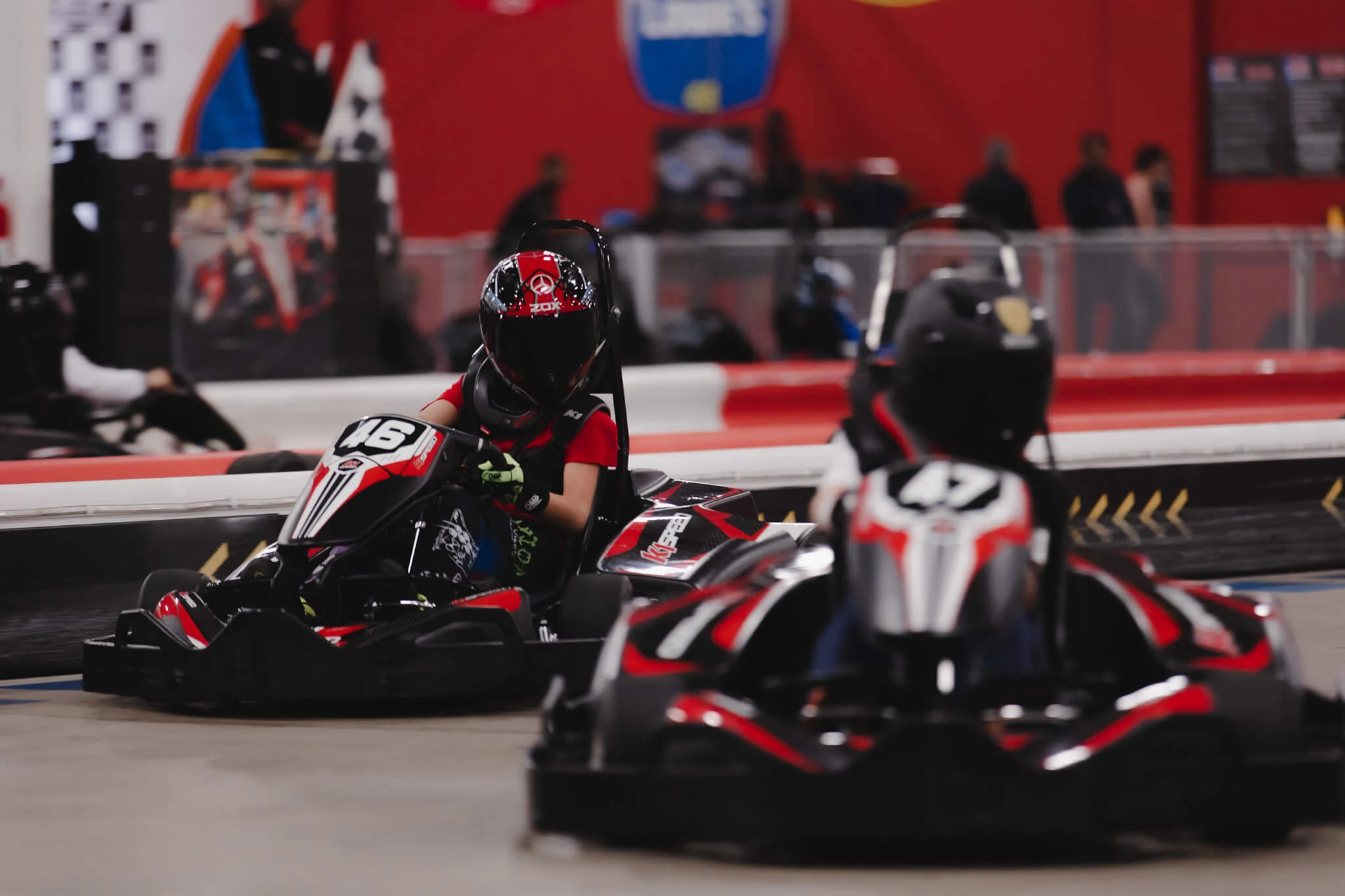
Electric go-karts use battery-powered motors that deliver instant torque, zero emissions, and consistent performance on every lap. Gas go-karts run on combustion engines with a more aggressive throttle response favoured by some drivers on outdoor tracks. At K1 Speed Cambridge, all racing takes place in electric karts built for indoor performance, competitive lap times, and a clean, controlled environment.
What Is the Difference Between Electric and Gas Go-Karts?
Electric go-karts are powered by rechargeable battery packs that drive an electric motor, while gas go-karts rely on small internal combustion engines running on petrol. The core mechanical difference produces a very different experience behind the wheel. Electric motors deliver peak torque from a standstill, so the acceleration is immediate and linear from the moment you press the pedal. Gas karts build power as engine RPM climbs, which creates a different feel but also more variability between karts. At K1 Speed Cambridge, all arrive and drive sessions use electric karts, which means every driver on the track is working with the same power delivery and the same performance floor. The table below summarizes the core differences between electric and gas go-karts across the factors that matter most to drivers:| Factor | Electric Go-Kart | Gas Go-Kart |
| Power delivery | Instant torque from zero RPM | Builds with engine RPM |
| Emissions | Zero exhaust emissions | Combustion exhaust present |
| Noise level | Quiet electric whine | Loud engine noise |
| Maintenance consistency | Uniform performance per kart | Varies with engine condition |
| Indoor suitability | Fully suited to enclosed tracks | Requires ventilation or outdoor space |
| Best environment | Indoor, climate-controlled venues | Outdoor tracks or large open facilities |
Why Do Electric Go-Karts Feel Faster Than Gas Karts?
Electric go-karts feel faster to most drivers because of how they deliver power. A combustion engine needs time to build RPM before it reaches its torque peak, which means there is a brief delay between pressing the accelerator and feeling full acceleration. An electric motor produces maximum torque immediately, which means the kart moves the moment you press the pedal. This characteristic, known as instant torque delivery, is one of the primary reasons electric karts feel more responsive and urgent in shorter indoor track formats. The CIK-FIA, the international governing body for karting, has recognized electric karting as a competitive category precisely because of how effectively electric powertrains perform in controlled racing conditions. The consistency of the power output also means that differences in lap time come down to driver skill and line choice rather than mechanical fluctuation between karts.Why Are Electric Karts Better Suited for Indoor Racing?
Indoor venues require electric karts because gas engines produce carbon monoxide and other combustion byproducts that are unsafe in enclosed spaces. Health Canada identifies carbon monoxide as a significant indoor air quality concern, noting that combustion sources indoors create conditions that pose serious health risks. This makes combustion-powered equipment inappropriate for enclosed racing environments. Electric karts produce no exhaust, which means the air quality inside K1 Speed Cambridge remains clean throughout every session, regardless of how many karts are on track at once. The absence of engine noise also changes the indoor experience. Gas karts are loud enough to require hearing protection in enclosed spaces. Electric karts produce a distinct high-pitch whine that is engaging without being damaging, which allows drivers to hear track marshals, communicate with their group, and stay focused on the race itself.How Do Electric Go-Karts Give Every Driver a Consistent Lap?
One of the most significant advantages of electric go-karts in competitive racing is the consistency they provide across all karts on the track. Gas engines are subject to mechanical wear, fuel mixture variation, and temperature sensitivity, which means two karts from the same fleet can perform differently even on the same day. Electric motors deliver a standardized output that is regulated by the kart management system, so every driver on the K1 Speed Cambridge track is working with equipment that performs to the same specification.How Do Electric Go-Karts Give Every Driver a Consistent Lap?
One of the most significant advantages of electric go-karts in competitive racing is the consistency they provide across all karts on the track. Gas engines are subject to mechanical wear, fuel mixture variation, and temperature sensitivity, which means two karts from the same fleet can perform differently even on the same day. Electric motors deliver a standardized output regulated by the kart management system, so every driver on the K1 Speed Cambridge track is working with equipment that performs to the same specification. The U.S. Department of Energy’s Alternative Fuels Data Center notes that all-electric vehicles use battery packs to power an electric motor and produce zero direct emissions, characteristics that make them well suited to enclosed performance environments like indoor karting. This consistency is critical for competitive events and league racing. Electric motors produce power in a highly repeatable way that combustion engines, which vary with temperature, fuel condition, and mechanical wear, simply cannot match. When lap times reflect driver ability rather than equipment variance, the racing is more meaningful and the results are more credible. This is why competitive indoor karting venues use electric karts rather than gas-powered alternatives.What Does It Actually Feel Like to Drive an Electric Go-Kart?
Driving an electric go-kart at K1 Speed Cambridge is a sharper, cleaner experience than most first-time drivers expect. The initial acceleration is immediate and strong, pushing you back in the seat from the moment you exit a corner. There is no engine lag, no gear shifting, and no waiting for power to arrive. You press the pedal and the kart responds. On a tight indoor track, this responsiveness rewards drivers who can be precise with their inputs and punishes those who are late on the throttle out of corners. The electric karts at K1 Speed Cambridge are purpose-built for indoor racing with seat adjustability, safety harnesses, and a neck collar system. The driving position is low to the ground, which heightens the sense of speed even at velocities that are entirely safe for all adult participants. For groups that include both experienced drivers and first-time racers, the electric kart format is forgiving to learn but rewarding to master.Are Electric Go-Karts Better for Group Events and Corporate Racing?
Electric go-karts are a significantly better choice for group events than gas karts for several practical reasons. The absence of exhaust fumes means large groups can race in an enclosed space without ventilation becoming a constraint. The quieter operation means groups can communicate, receive briefings from track staff, and enjoy the event without constantly raising their voices. The consistent performance across all karts means no participant has an equipment advantage, which makes the racing fairer and more fun for everyone involved. For corporate events and group celebrations, the clean and modern presentation of electric karting also matters. K1 Speed Cambridge offers structured corporate event packages that are designed around the electric kart format, with reserved track time, group coordination, and racing formats that work across all experience levels. The consistency of electric karts makes it straightforward to run timed races, elimination formats, and team competitions where results are determined by skill rather than mechanical luck.Ready to Race in an Electric Kart at K1 Speed Cambridge?
K1 Speed Cambridge runs electric karts in every session, from arrive and drive through to competitive league racing and private group events. If you want to experience the difference that instant torque and consistent performance make on a competitive indoor track, your next step is to plan your visit. Check the Cambridge pricing for current arrive and drive rates and group options, then contact the venue directly to confirm availability for your preferred date and group size.Frequently Asked Questions
1. Are electric go-karts faster than gas go-karts?
Electric go-karts are not necessarily faster in absolute top speed, but they feel faster because of instant torque delivery. The moment you press the accelerator, the motor responds with full power, which makes acceleration sharper than a gas kart that builds RPM first. On an indoor track where acceleration out of corners matters more than top speed, electric karts consistently feel more responsive. Learn more about the racing experience through the arrive and drive details.2. Do electric go-karts need special maintenance before a race?
No special maintenance is required from the driver. Electric go-karts at K1 Speed Cambridge are maintained by venue staff and arrive at each session fully charged and inspected. Drivers simply follow the safety briefing, complete their waiver and rules requirements, and get on track. The consistent maintenance of electric karts is one of the reasons they offer more reliable performance than gas alternatives that require regular tuning.3. Can beginners drive electric go-karts at K1 Speed Cambridge?
Yes, electric go-karts are accessible to beginners because the controls are simple: accelerate, brake, and steer. There is no clutch, no gear shifting, and no engine management required. The K1 Speed Cambridge karting academy offers structured programs for younger and newer drivers who want to develop their skills in a safe and supportive environment. Adult first-timers are also welcome in every arrive and drive session.4. Are electric go-karts good for group events?
Electric go-karts are the best option for group events. They are quieter, cleaner, and more consistent than gas karts, which makes them easier to manage across a large group with mixed experience levels. K1 Speed Cambridge offers dedicated groups and parties packages that include reserved racing time, group coordination support, and formats designed for birthday parties, corporate outings, and social events.5. How do electric go-karts perform in competitive racing?
Electric go-karts perform exceptionally well in competitive racing because their consistent power output means lap times reflect driver skill rather than equipment differences. K1 Speed Cambridge runs a junior race league and other competitive programs using the same electric kart fleet available for arrive and drive sessions. The standardized performance of each kart ensures that competition is fair and results are earned through racecraft rather than mechanical advantage.Key Takeaways
- Electric go-karts deliver instant torque from a standstill, making them feel more responsive and sharper to drive than gas karts on an indoor track.
- Indoor venues require electric karts because combustion engines produce exhaust that is unsafe in enclosed spaces without significant ventilation.
- Consistent electric motor output means every kart on the K1 Speed Cambridge track performs to the same specification, so lap times reflect driver skill.
- Electric karts are quieter and cleaner than gas karts, making them better suited to group events, corporate racing, and birthday party formats.
- K1 Speed Cambridge uses electric karts exclusively across all arrive and drive sessions, league programs, and group event packages.
BLOG | CONTACT | FAQs | RULES | CAREERS | BOOK ONLINE | GIFT CARDS
© K1 SPEED, INC. ALL RIGHTS RESERVED | PRIVACY POLICY | TERMS AND CONDITIONS | ACCESSIBILITY POLICY
© K1 SPEED, INC. ALL RIGHTS RESERVED