
How to Improve Cornering Stability at High Speeds in Karting
August 6, 2026
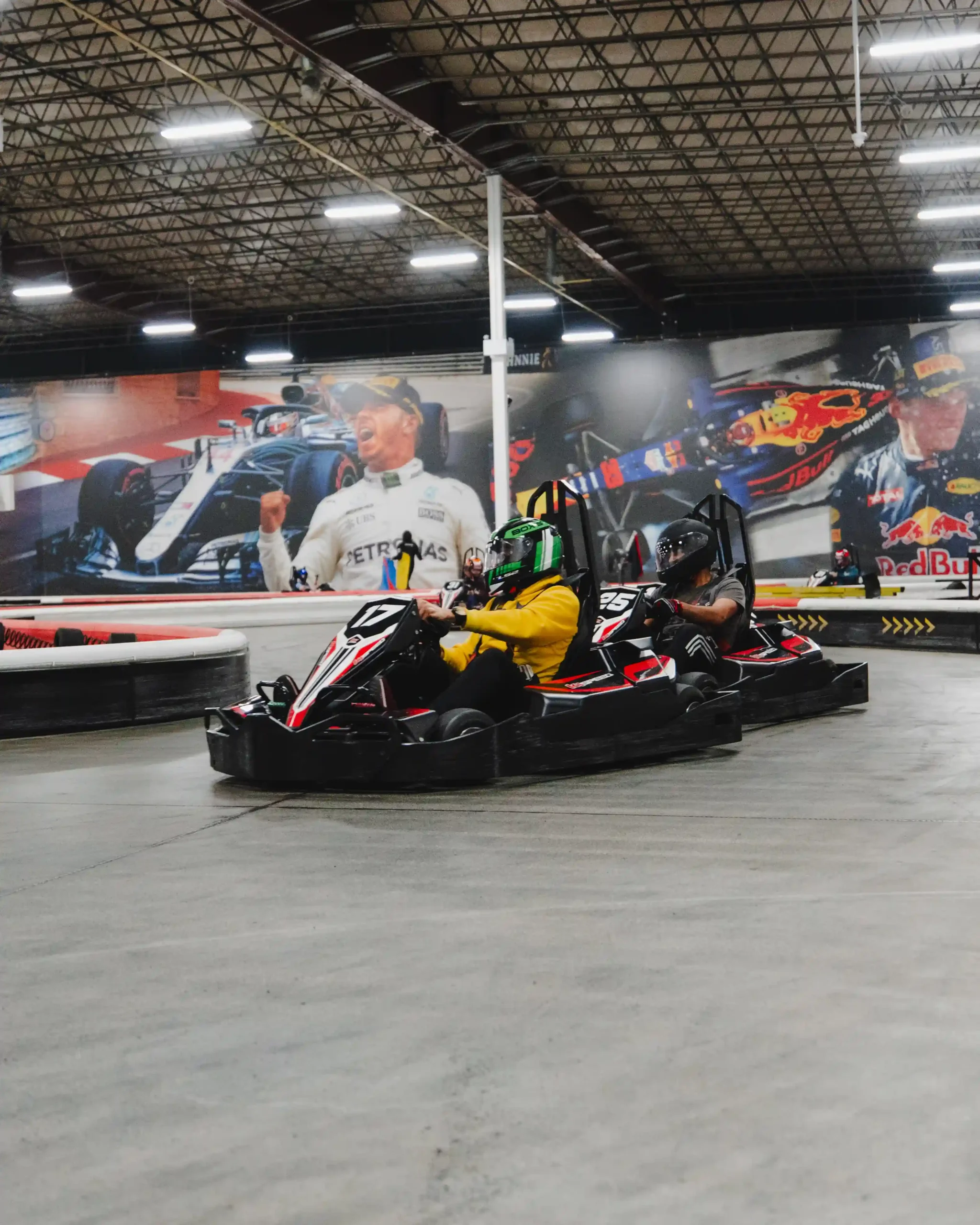
Cornering stability at speed comes down to how your body manages weight and grip in the kart, not just where you brake or turn in. Getting your seat position, grip, and weight transfer right keeps the kart planted through fast corners instead of sliding wide or bouncing off the racing line.
What Causes a Kart to Feel Unstable Through Fast Corners?
Instability through a corner usually comes from how weight and grip interact rather than from speed alone. As a kart turns, weight shifts toward the outside wheels, and if your body isn't braced to manage that shift, the kart can feel loose or slide wider than intended. This becomes more noticeable at higher speeds, where the same amount of instability has less time to correct itself before the next corner arrives.
How Should Your Body Position Affect Stability?
Your seat position and posture do more for stability than most drivers expect. Sitting upright with your core braced, rather than leaning heavily into the turn, keeps your body weight centered and predictable for the kart to work with. Bracing your outside leg against the footwell during a corner gives you a stable anchor point, which reduces the amount your upper body shifts and keeps your steering inputs more accurate.
Why Does Grip on the Wheel Matter for High-Speed Stability?
A firm, controlled grip on the wheel, rather than a tight or tense one, lets you feel small changes in the kart's balance and react to them smoothly. Gripping too hard tends to create jerky corrections that unsettle the kart further, while a relaxed but firm hold allows you to make small steering adjustments through the corner instead of one large input at turn-in.
How Should You Use the Steering Wheel Through a Fast Corner?
Steering input through a fast corner is less about how much you turn the wheel and more about how smoothly you do it. A sharp, sudden turn-in at speed shifts weight abruptly to the outside of the kart, which can break traction before you even reach the apex. A progressive, controlled input lets weight transfer happen gradually, which keeps the kart balanced and easier to manage through the middle of the corner.
Once you're committed to the turn, avoid making large corrections mid-corner. Small, smooth adjustments keep the kart on its intended line, while bigger inputs tend to unsettle the chassis and push you wide. As you approach the exit, releasing the wheel progressively rather than unwinding it all at once keeps the kart stable as weight shifts back under acceleration. The same controlled approach that gets you into a corner cleanly also gets you out of it faster.
How Does Weight Transfer Affect Stability at Speed?
Every time a kart brakes, turns, or accelerates, weight shifts to different parts of the chassis, and stability comes from managing that shift smoothly rather than fighting it. Trail braking gently into a corner, rather than braking hard and releasing all at once, keeps weight settled on the front end longer and gives the kart more grip to turn with. This becomes especially important in faster corners, where a sudden weight shift has a bigger effect on the kart's balance.
How Is Stability Different From Racing Lines and Braking Points?
Racing lines and braking points, covered in our cornering tips guide, are about where you position the kart on the track. Stability is about how your body and inputs keep the kart planted once you're already committed to that line. Both work together: even a perfect racing line feels unstable if your body position and grip aren't giving the kart a solid base to turn from.
Building Stability Into Every Lap
Stability through high-speed corners isn't a separate skill from braking or cornering lines, it's what makes those techniques hold up at speed. Solid body position, a controlled grip, and smooth weight transfer work alongside good braking technique to keep your kart planted lap after lap, especially across a full Challenge GP night where consistency matters as much as raw speed.
Ready to put this into practice? Find your nearest K1 Speed location in Toronto, Mississauga, or Cambridge and book your next session.
Frequently Asked Questions
1. Why does my kart feel unstable in fast corners but not slow ones?
Faster corners give weight shifts less time to settle before you need to react, so any looseness in your body position or grip becomes more noticeable. The same technique issues exist at low speed, they just have more time to correct themselves.
2. Does bracing my leg against the footwell really help?
Yes. It gives your body a stable anchor point during cornering, which reduces how much your upper body shifts and keeps your steering inputs more consistent through the turn.
3. Should I grip the wheel tighter for more control at high speed?
No. A tight, tense grip tends to create jerky corrections that unsettle the kart further. A firm but relaxed grip lets you feel the kart's balance and make smoother adjustments.
4. What is trail braking and does it help with stability?
Trail braking means easing off the brake gradually into a corner instead of releasing it all at once. It keeps weight settled on the front end longer, which gives the kart more grip and stability as you turn in.
5. Is cornering stability something beginners should focus on?
Yes. Body position and a controlled grip are fundamentals that help any driver, regardless of experience, feel more in control through corners rather than reactive to what the kart is doing.
Key Takeaways
- Cornering instability at speed usually comes from weight and grip management, not speed itself.
- Upright posture and a braced outside leg give your body a stable base to steer from.
- A firm, relaxed grip on the wheel allows smoother corrections than a tight, tense one.
- Trail braking keeps weight settled on the front end and improves grip through the corner.
- Stability works alongside racing lines and braking points, it doesn't replace them.
BLOG | CONTACT | FAQs | RULES | CAREERS | BOOK ONLINE | GIFT CARDS
© K1 SPEED, INC. ALL RIGHTS RESERVED