
How Go-Kart Scoring and Lap Timing Systems Work
May 18, 2026
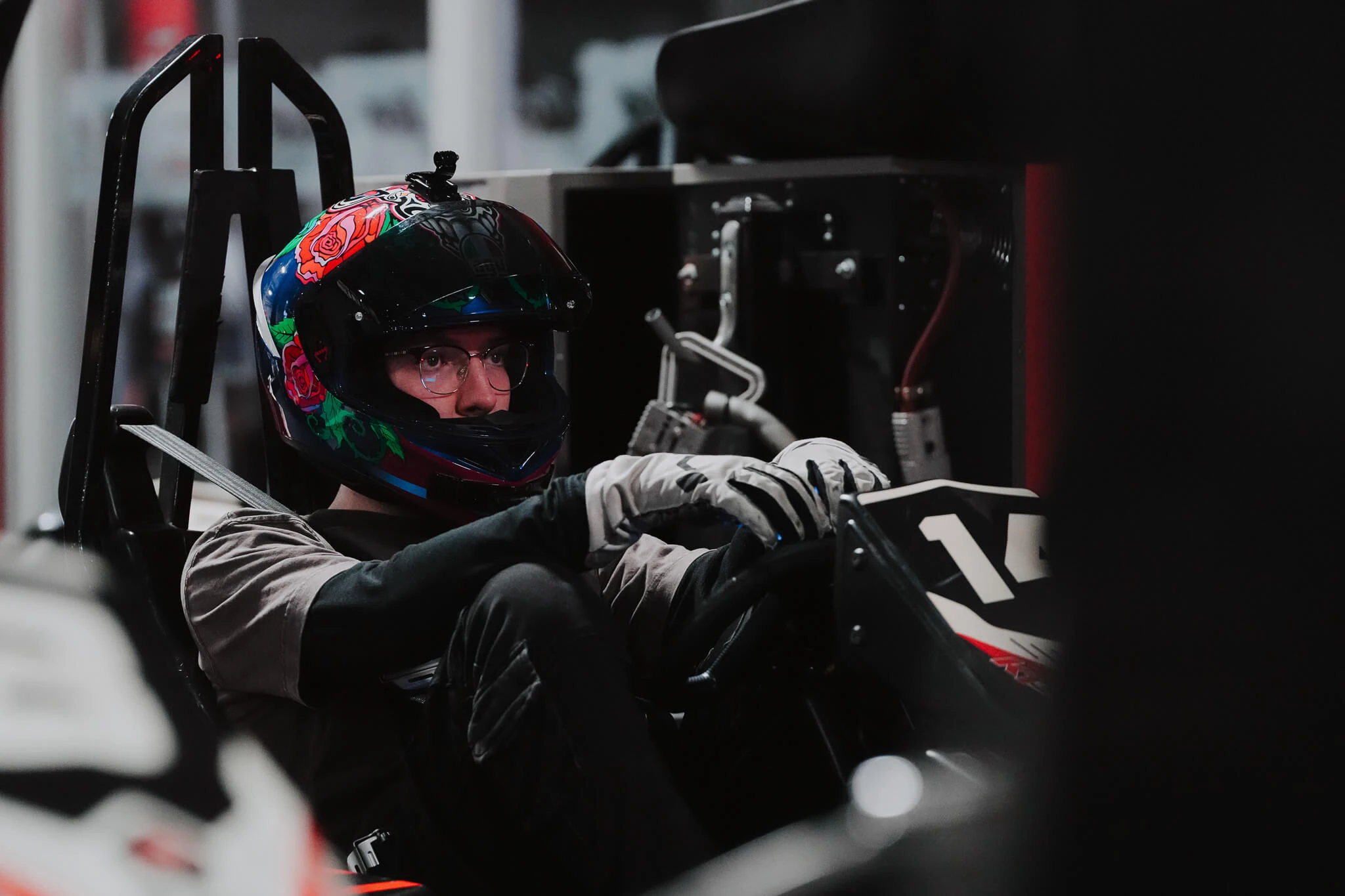
Go-kart timing systems work by using electronic transponders mounted on each kart and timing loops embedded in the track surface, every time a kart crosses the loop, the system records the exact time to fractions of a second and assigns it to that driver’s unique identifier. The go kart lap timing system then compiles this data in real time into lap times, race positions, and fastest lap statistics that appear on leaderboard screens immediately after the session ends. At K1 Speed Canada, understanding how go kart scoring works is what turns a casual race into a measurable, competitive experience that brings groups back for more.
The Moment That Changes Every Race
You finish your race, pull into the pit lane, and step out of the kart. A few seconds later, the leaderboard appears on the screen. Suddenly everyone is comparing results. Who had the fastest lap? Who improved mid-race? Who finished first by a fraction of a second?
For many racers, that leaderboard moment is the highlight of the entire evening. But behind it is a sophisticated system that makes the whole thing possible. Understanding how go-kart timing systems work reveals the technology that turns recreational laps into precise, measurable competitive data, and adds an entirely new layer of appreciation to the racing experience.
At K1 Speed Canada, professional lap timing technology ensures that every racer receives accurate results immediately after the race. When you’re ready to see your name on the leaderboard, book your race at K1 Speed.
What Are Go-Kart Timing Systems?
When people ask how go-kart timing systems work, they’re referring to the automated technology that tracks a driver’s performance across every lap of a race. These systems measure lap times, race position, total race time, fastest lap, and number of completed laps, all without any manual recording by staff.
Instead of relying on stopwatches or visual observation, modern go kart lap timing systems use sensors, transponders, and timing software working together in real time. This technology ensures that every racer’s performance is recorded with precision down to fractions of a second, regardless of how many karts are on track simultaneously.
For drivers, this means the race becomes more than just driving. It becomes a measurable challenge: improve your cornering line, shave a tenth of a second off your lap time, move up the leaderboard. At K1 Speed Canada, these results are displayed immediately after the race, giving every racer something concrete to work toward in their next session. You can find full venue details and session booking at the K1 Speed.
How a Go Kart Lap Timing System Works: Step by Step
The mechanics behind how go-kart timing systems work are built on three core components working together: a unique identifier on each kart, sensors embedded in the track, and software that compiles and displays the data. Here’s how each step functions.
Step 1: Each Kart Has a Unique Electronic Identifier:
Every kart used in a timed session is assigned a unique electronic transponder, a small device that communicates a distinct signal to the track’s timing infrastructure. This identifier is what allows the go-kart lap timing system to know exactly which kart is crossing any given point on the track at any given moment. Without this component, the system cannot attribute lap times to individual drivers.
Step 2 : Track Sensors Detect Every Lap:
Embedded in the track surface at the start and finish line, and sometimes at additional intermediate points around the circuit, are timing loops or detection sensors. Every time a kart’s transponder passes over these loops, the system registers the exact timestamp of the crossing, identifies which kart crossed, and records the lap number in sequence. Because the system operates electronically, it captures results to fractions of a second. This accuracy is sufficient to separate drivers who cross the finish line within milliseconds of each other.
Step 3: Software Calculates and Displays Race Results:
The timing software receives the sensor data in real time and automatically calculates individual lap times for every driver, overall race position based on distance completed, the fastest single lap of the session for each racer, and total race duration. These results are then pushed to display screens throughout the venue. This is the leaderboard that appears within seconds of the race ending. This is how go kart scoring works at its most fundamental level: raw sensor data transformed into a ranked, competitive result that every racer can see and act on.
K1 Speed Canada displays these results prominently across screens in the venue at all four locations : Cambridge, Toronto, and Mississauga.
Why Go-Kart Timing Systems Make Racing More Competitive
Without timing technology, recreational karting would feel significantly less engaging. Understanding how go-kart timing systems work explains why: the go kart lap timing system is what transforms a casual drive around a track into a structured, measurable competition. It creates accountability, motivation, and a natural drive to improve.
The competitive benefits of lap timing include the ability to track personal improvement from lap to lap within a single session, compare performance with friends and competitors in the same race, identify the fastest driver in the group with objective precision, and compete in structured formats like qualifying and race-for-position sessions where every tenth of a second matters.
At K1 Speed Canada, the go kart lap timing system is a core part of the arrive-and-drive experience, not an optional feature. Even first-time racers quickly become invested in their lap times after seeing the results screen. The K1 Speed covers how results are displayed and what each metric means for new drivers.
The precision behind modern timing systems is well-documented in motorsport technology literature. AMB/MyLaps, one of the world’s leading providers of karting timing technology, publishes detailed technical resources explaining how transponder-based lap timing systems achieve millisecond-level accuracy across multi-kart race fields.
Understanding Your Race Results and Leaderboard
Knowing how go kart scoring works also means understanding what the results screen is telling you after a race. A typical K1 Speed Canada race results leaderboard includes several performance metrics that give drivers a complete picture of their session.
Key metrics on the leaderboard:
- Fastest Lap: Your quickest single lap during the race. This is the headline statistic most drivers immediately look for.
- Average Lap Time: Your overall pace across the session, which reflects consistency more than peak performance
- Race Position: Where you finished relative to all other drivers in your session
- Total Race Time: Your complete session duration from start to finish
For many drivers, the fastest lap becomes the primary competitive metric. Even a driver who did not win the race outright may still hold the fastest single lap, which carries its own competitive weight. These details turn every race into a layered mix of strategy, skill, and measurable improvement that keeps drivers coming back.
How Timing Technology Enhances the Full K1 Speed Experience
Understanding how go-kart timing systems work also explains why the leaderboard moment is so socially powerful. The technology behind how go kart scoring works does more than measure performance. It becomes the catalyst for the social energy that defines the rest of the evening at K1 Speed Canada.
After each race, guests typically gather around the leaderboard screens to compare times and challenge each other to another session. This competitive social dynamic is exactly what makes go-karting work so well for birthday celebrations, corporate team building events, friends’ nights out, and competitive racing leagues. The scoreboard makes every race feel meaningful, even for first-time drivers who have never been on a track before.
Because K1 Speed Canada is designed around Eat. Play. Race., the timing system’s competitive energy flows naturally into the rest of the venue experience. Check current deals and promotions for group session options that include multiple races giving your group more data, more competition, and more chances to improve their lap times.
The Technology Behind Every Lap Makes the Race Real
Understanding how go-kart timing systems work reveals the precision technology that makes every K1 Speed session genuinely competitive. The go kart lap timing system tracks every lap, every driver, and every race position with electronic accuracy. How go kart scoring works is the reason the leaderboard moment consistently becomes the most talked-about part of the evening.
At K1 Speed Canada, that timing technology combines with high-performance electric karts, professional indoor tracks, and the full Eat. Play. Race. experience across four year-round Ontario locations. Once the leaderboard appears, the real competition begins.
Frequently Asked Questions: How Go-Kart Timing Systems Work
1. How do go-kart timing systems work?
Go-kart timing systems work using electronic transponders on each kart and timing loops embedded in the track surface. Every time a kart crosses the timing loop, the system records the exact timestamp and kart identifier, then calculates lap times and race positions automatically. Results are displayed on leaderboard screens within seconds of the race ending.
2. How accurate are go kart lap timing systems?
Modern go kart lap timing systems measure to fractions of a second, typically millisecond-level accuracy. This precision is sufficient to separate drivers who cross the finish line within a very small margin of time, ensuring that race results are always objective and reliable regardless of how close the finish is.
3. Do racers receive their lap times after the race at K1 Speed Canada?
Yes. After every session at K1 Speed Canada, drivers can view their lap times, fastest lap, race position, and average pace on the leaderboard screens throughout the venue. This is one of the most popular moments of any race night, and one of the main reasons groups book multiple sessions during a single visit.
4. How does go kart scoring work in a race format?
How go kart scoring works is straightforward: the timing software ranks drivers by total distance completed (most laps) and time within that lap count. Fastest lap is recorded separately as an individual metric. In arrival-and-drive sessions at K1 Speed Canada, all karts in a session run simultaneously and results are determined by the go-kart lap timing system automatically, with no manual input required.
5. Do I need racing experience to race at K1 Speed Canada?
No experience is required. K1 Speed Canada’s arrive-and-drive format means first-time drivers complete a safety briefing and race the same day. The go kart lap timing system captures performance data from your very first lap.
6. How long does a typical visit to K1 Speed Canada last?
Most visits last 90 minutes to 2 hours depending on how many races are booked. Many guests extend their stay to enjoy the arcade and Paddock Lounge after reviewing their lap times.
7. Is K1 Speed Canada open year-round?
Yes. All four K1 Speed Canada locations Cambridge, Toronto, and Mississauga are fully indoors and operate year-round. The go-kart timing systems run every session regardless of the season.
Ready to See Your Name on the Leaderboard?
Now that you understand how go-kart timing systems work, the only thing left is to put your lap time on the board. K1 Speed Canada is open year-round across four Ontario locations, no experience required. Book your race at K1 Speed, open year-round across Cambridge, Toronto, and Mississauga.
Key Takeaways
- Go-kart timing systems work using electronic transponders on each kart and timing loops embedded in the track, recording every lap to millisecond precision automatically.
- The go kart lap timing system assigns a unique identifier to each kart so the software can attribute every lap crossing to the correct driver in real time.
- How go kart scoring works: software ranks drivers by laps completed and time, calculates fastest lap and average pace, and displays results on leaderboard screens within seconds of the race ending.
- Lap timing technology transforms recreational karting from a casual drive into a measurable competition, creating the motivation to improve that keeps drivers returning for more sessions.
- Key leaderboard metrics include fastest lap, average lap time, race position, and total session duration, each providing a different lens on driver performance.
- K1 Speed Canada’s go kart lap timing system is active across all four Ontario locations and every arrival-and-drive session, from first-time visitors to competitive regulars.
- The Cambridge location offers exclusive weekday and Sunday pricing promotions, making it the best-value option for groups wanting multiple timed sessions.
BLOG | CONTACT | FAQs | RULES | CAREERS | BOOK ONLINE | GIFT CARDS
© K1 SPEED, INC. ALL RIGHTS RESERVED