How Indoor Go Kart Track Safety Standards Work Together
August 18, 2026
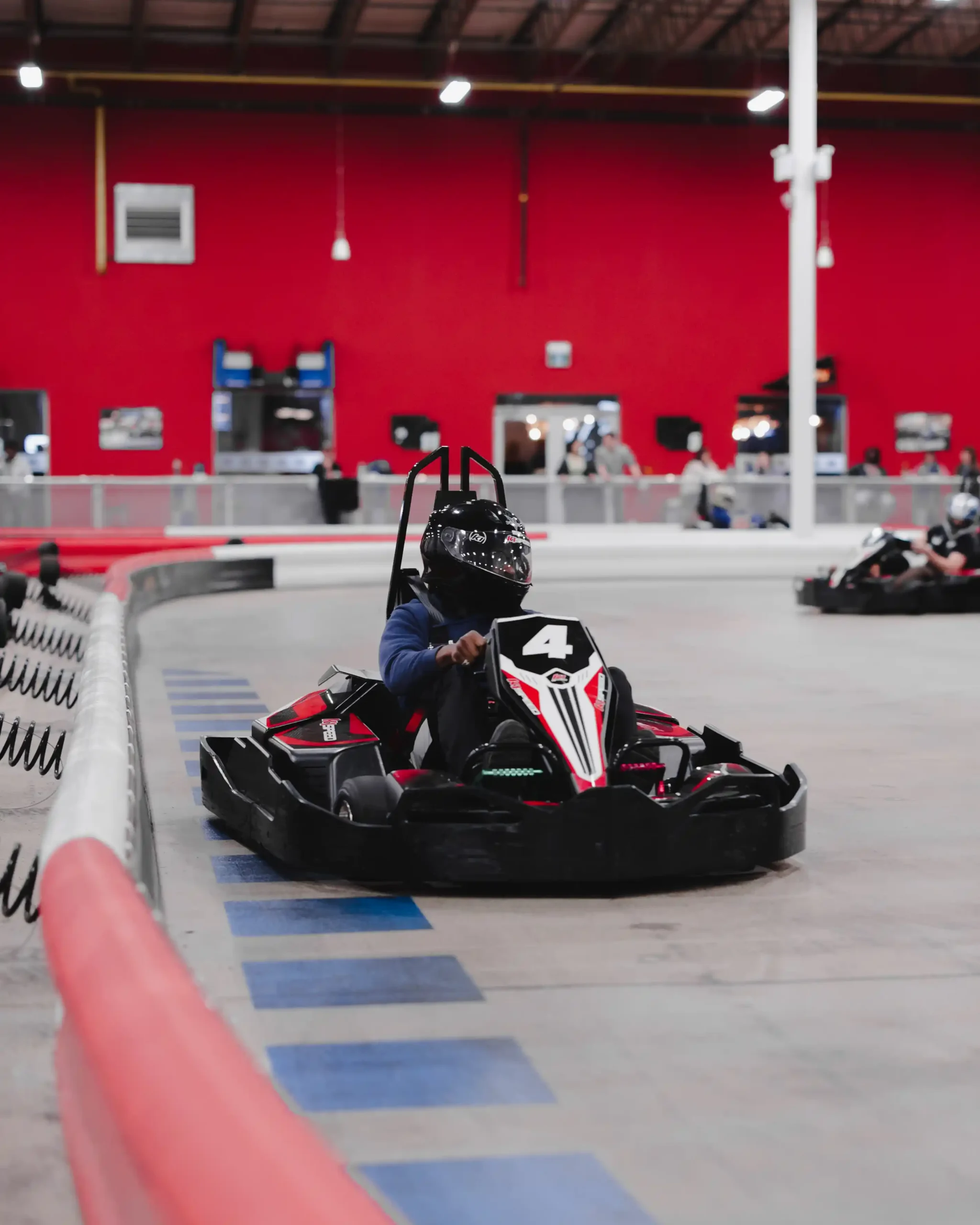
Indoor track safety comes from a combination of physical design, kart engineering, and staff protocol working together, not any single feature on its own. Understanding how barriers, track surface, speed control, and trained staff fit together explains why a well-run indoor track can support high-speed racing safely.
What Physical Features Keep an Indoor Track Safe?
Barrier systems along every corner and wall are designed to absorb impact and keep karts contained on the track surface, rather than simply blocking them. The track surface itself is built for consistent grip in a controlled, climate-stable environment, which removes the unpredictability that weather or debris can introduce outdoors. Adequate run-off space around corners gives drivers room to correct a mistake without immediately hitting a barrier, which matters more as speed increases through faster sections.
How Do Electric Karts Contribute to Safety at Speed?
Modern electric karts offer more consistent, predictable power delivery than older gas-powered models, which makes their behavior easier for drivers of all experience levels to anticipate. Karts are also typically speed-governed by class, so junior, standard, and high-performance karts each operate within a range appropriate to the driver's experience and the track's design. This layered approach means a first-time driver and an experienced racer can share the same track safely, even at different real-world speeds.
What Role Does Staff Training Play in Track Safety?
Trained staff monitor every session, watch for driving behavior that could create risk, and can stop a race quickly if needed. Pre-race briefings set clear expectations for passing, contact, and track etiquette before anyone gets behind the wheel, which reduces confusion once karts are moving at speed. Staff also handle kart inspection and maintenance between sessions, so mechanical issues are caught before they become a safety concern on track.
How Do Speed Zones and Track Layout Support Safety?
Track designers place faster sections, like long straightaways, in areas with the most run-off space and clearest sightlines, while tighter, lower-speed sections handle areas with less margin for error. This means the layout itself is part of the safety system, not just the barriers or karts. Understanding where a track's fastest sections are also explains why those areas are engineered with extra safety margin built in.
How Kart Maintenance Keeps Every Session Running Safely
A kart that passes visual inspection before a session is only part of the picture. Well-run indoor facilities follow a maintenance schedule that includes checking brakes, steering response, and battery systems between sessions, not just at the start of each day. Electric karts have fewer mechanical failure points than gas-powered models, but brake wear, steering play, and harness condition still require regular checks to stay within safe operating limits.
At K1 Speed, karts are inspected and rotated as part of standard session management. This means a kart that shows any sign of inconsistent handling is pulled before the next race group goes out, rather than flagged mid-session. For guests, this is mostly invisible. But it is one of the reasons that the karts feel consistent from the first lap to the last, whether you are in an arrive-and-drive session or a full Challenge GP night with multiple heats on the same track.
How Is This Different From General Racing Safety Guidelines?
Our general safety guidelines cover what guests do to race safely: following the briefing, wearing provided equipment, and respecting track rules. This piece is about the standards behind the scenes, the track engineering, kart systems, and staff protocols that make that guest-facing safety possible in the first place.
Safety as the Foundation of Every Session
None of the excitement of indoor karting works without the engineering, training, and protocols running quietly behind it. Barriers, track surface, kart speed governance, and trained staff all work together so that every session, from a casual arrive-and-drive lap to a competitive Challenge GP night, happens on a track built to support real speed safely.
Curious to see it in action? Find your nearest K1 Speed location in Toronto, Mississauga, or Cambridge and book your next session.
Frequently Asked Questions
1. What stops a kart from leaving the track during a race?
Barrier systems along corners and walls are designed to absorb impact and keep karts contained on the track surface, working alongside adequate run-off space that gives drivers room to correct a mistake.
2. Are electric karts safer than gas karts?
Electric karts generally offer more consistent, predictable power delivery, which makes their behavior easier for drivers of all experience levels to anticipate compared to older gas-powered models.
3. How are karts kept safe for different skill levels?
Karts are typically speed-governed by class, meaning junior, standard, and high-performance karts each operate within a range suited to the driver's experience and the track's design.
4. What do staff actually monitor during a race?
Trained staff watch driving behavior throughout each session, can stop a race quickly if needed, and handle kart inspection and maintenance between sessions to catch mechanical issues early.
5. Does track layout itself contribute to safety?
Yes. Faster sections are typically placed in areas with the most run-off space and clearest sightlines, while tighter, lower-speed sections handle areas with less margin for error.
Key Takeaways
- Indoor track safety comes from barriers, track surface, kart engineering, and staff protocol working together.
- Run-off space and barrier design give drivers room to correct mistakes at speed.
- Electric karts and class-based speed governance make racing more predictable across skill levels.
- Trained staff monitor sessions and maintain karts to catch issues before they become risks.
- Track layout itself is part of the safety system, with faster sections placed where margin for error is greatest.
BLOG | CONTACT | FAQs | RULES | CAREERS | BOOK ONLINE | GIFT CARDS
© K1 SPEED, INC. ALL RIGHTS RESERVED