
Physical Readiness Guide for High-Speed Go-Kart Racing
August 2, 2026
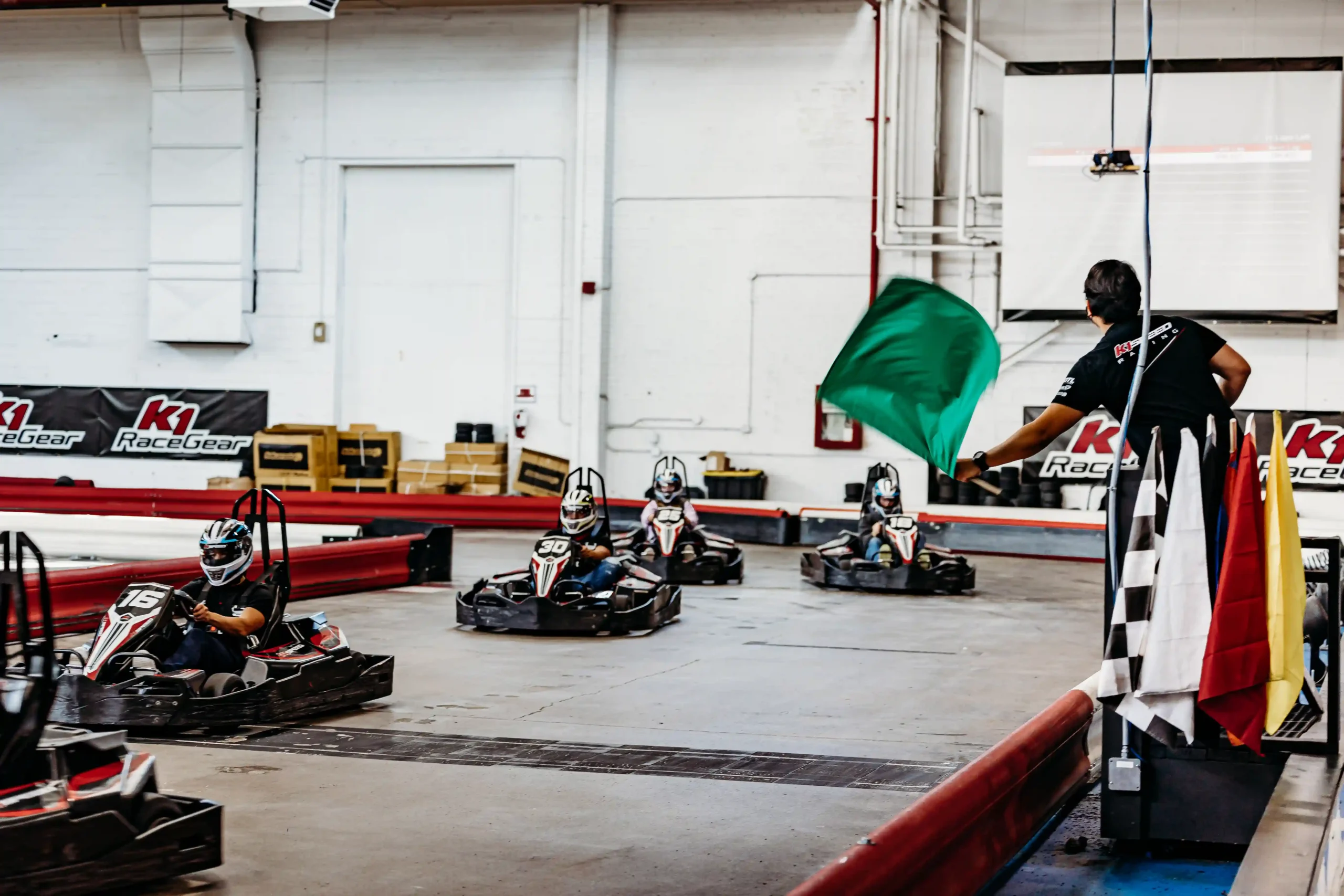
High-speed indoor karting places real load on your neck, core, and forearms as your body reacts to cornering forces. A short warm-up routine, proper hydration, and a few weeks of targeted conditioning make a noticeable difference once you move from casual laps to competitive speeds.
What Makes High-Speed Go-Karting Physically Demanding?
Racing an electric kart at speed is a full-body activity, not a seated one. Karts have no power steering, so every turn of the wheel comes directly from your arms and shoulders. As speed increases through corners, your body experiences lateral and braking forces that pull your head and torso sideways and forward. Recreational karts generate noticeably lower forces than competitive machines, but K1 Speed's electric karts still produce enough cornering load, especially across a full session or a Challenge GP heat, that your neck, core, and grip strength all get tested. Guests who race regularly tend to notice this fatigue less, simply because their bodies have adapted to it over repeated sessions.
How Should You Condition Your Neck and Core Before Racing?
Your neck and core work together to keep your head stable and your body balanced through every corner, and both muscle groups can be trained specifically for this. Simple neck rotations, forward and backward stretches, and light resistance exercises done a few times a week build the stability needed to hold your head steady under cornering load. Core work such as planks, seated twists, and controlled sit-ups gives you a stronger base in the seat, which keeps your steering inputs consistent instead of drifting as your body shifts. Two to three short sessions a week in the weeks before a competitive race day are enough to notice a difference on the track.
What Warm-Up Routine Works Best Right Before High-Speed Laps?
A warm-up in the minutes before you strap in matters as much as the training you did that week. Light neck rotations, shoulder rolls, and forearm stretches loosen the muscles you rely on most and reduce the stiffness that shows up mid-session. A few minutes of dynamic movement such as arm circles or bodyweight squats raises your heart rate slightly, which helps your body handle the first few fast laps without feeling caught off guard by the pace.
Why Does Hydration Matter for Racing Performance?
There is no water bottle in the kart, and a full racing session raises your heart rate and body temperature more than most guests expect. Arriving hydrated, and continuing to drink water between races rather than only before your visit, helps prevent the early fatigue and reduced focus that dehydration causes. This becomes more noticeable during multi-race packages or Challenge GP heats, where your body is working across several sessions in a row rather than a single race.
How Can You Recover Between High-Speed Sessions?
Recovery between races is where a lot of the physical benefit actually happens. A brief stretch of the neck, shoulders, and lower back between heats keeps muscles from tightening up, and a few minutes of rest lets your heart rate settle before your next session. Guests racing multiple times in one visit, whether in a private group booking or a Challenge GP night, tend to perform more consistently in their later races when they treat the breaks as part of the preparation rather than downtime.
How Is Physical Prep Different From First-Race Preparation?
Getting ready for your first visit is mostly about logistics: what to wear, how the waiver process works, and what to expect when you arrive. Our first-race preparation guide covers exactly that. Physical readiness is a separate layer that becomes more relevant once you're racing regularly or stepping into competitive formats, where sustained speed and repeated cornering forces place real demand on your body across an entire session. Guests curious about the broader physical upside of the sport can also see the physical benefits of go-karting we've covered separately.
Getting Your Body Ready for Race Day at K1 Speed
Physical preparation is not about turning a fun afternoon into a training program. A few neck and core exercises during the week, a short warm-up before you race, and staying hydrated through your session are enough to notice sharper, more consistent laps, especially if you're working on braking technique or racing in our Challenge GP competitive series. The better your body handles the forces of the track, the more of your focus goes toward the race itself.
Ready to put your preparation to the test? Find your nearest K1 Speed location in Toronto, Mississauga, or Cambridge and book your next session.
Frequently Asked Questions
1. Do I need to be an athlete to race at high speed?
No. K1 Speed's electric karts are built for guests of all fitness levels, and most physical demand comes from repeated cornering forces rather than raw athleticism. A short warm-up and basic conditioning are enough for most racers stepping up to faster, more competitive sessions.
2. What muscles get the most workout during high-speed karting?
The neck, core, and forearms take on the most load. Your neck and core stabilize your head and torso through cornering forces, while your forearms and shoulders manage steering input since the karts have no power steering.
3. How soon before a race should I warm up?
A short warm-up in the five to ten minutes before your session works well. Light neck rotations, shoulder rolls, and a few dynamic movements are enough to prepare your body without tiring you out before you race.
4. Does hydration really affect lap times?
It can. Dehydration contributes to fatigue and reduced focus during longer sessions or multi-race packages, both of which affect consistency behind the wheel. Staying hydrated throughout the day, not just right before you arrive, makes a noticeable difference.
5. Is physical preparation different for Challenge GP racing?
Challenge GP sessions involve multiple heats in a row, which places more cumulative demand on your neck, core, and grip strength than a single casual race. Recovery between heats, including brief stretching and hydration, matters more in this format than in a one-off arrive-and-drive session.
Key Takeaways
- High-speed karting places real physical demand on the neck, core, and forearms, even in electric karts.
- Two to three short conditioning sessions a week can improve comfort and consistency on the track.
- A brief warm-up right before racing reduces stiffness and helps your body adjust to speed faster.
- Hydration throughout the day, not just before arrival, supports focus and reduces fatigue.
- Physical readiness is most noticeable during multi-race sessions and Challenge GP competitive racing.
BLOG | CONTACT | FAQs | RULES | CAREERS | BOOK ONLINE | GIFT CARDS
© K1 SPEED, INC. ALL RIGHTS RESERVED