
Go-Karting Etiquette Rules Every Racer Should Know
May 17, 2026
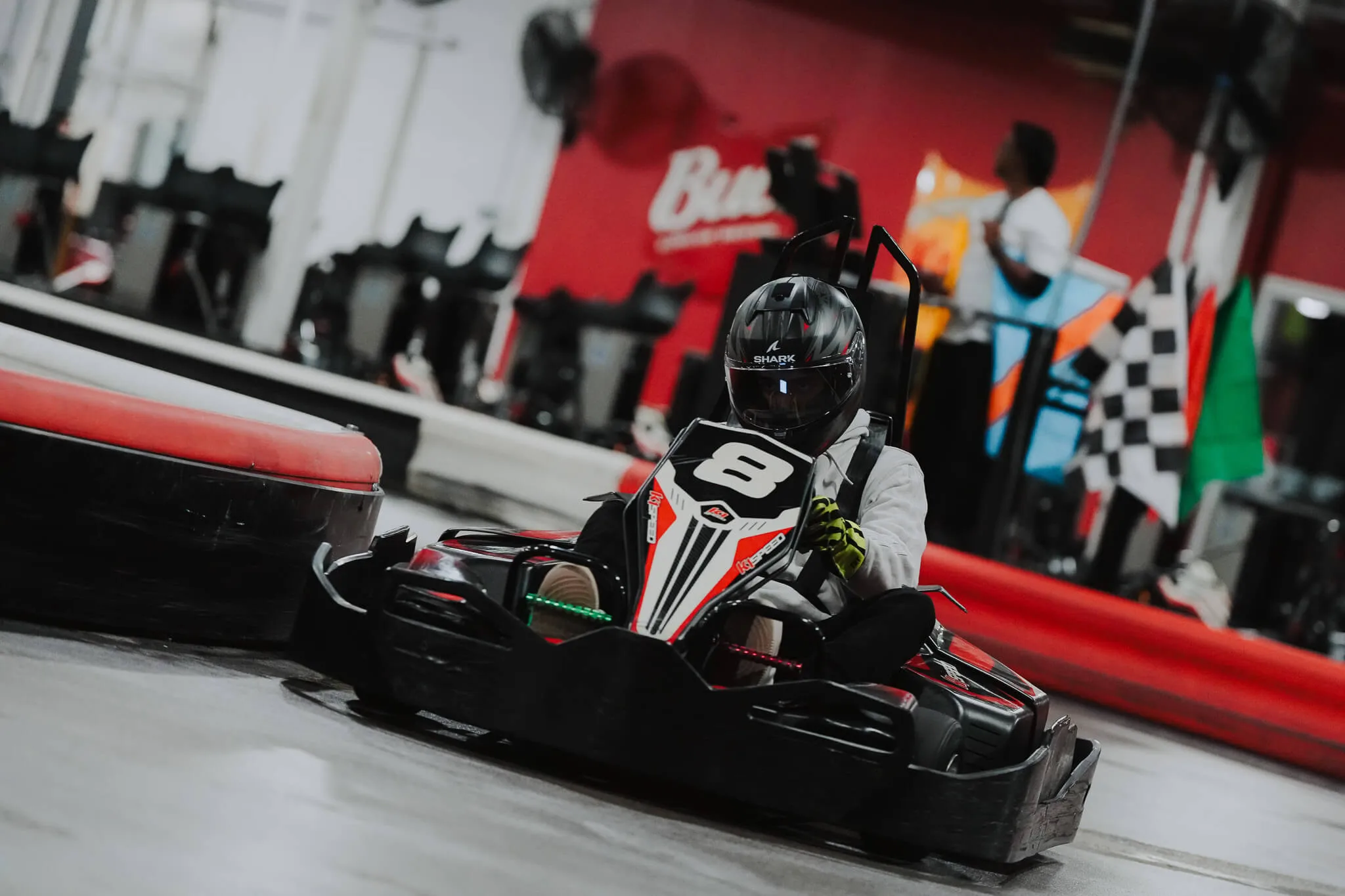
Go-karting etiquette rules are the unwritten guidelines that keep races safe, competitive, and enjoyable for everyone on the track, and they matter just as much as your lap time. The core principles of go kart racing etiquette are straightforward: hold a predictable racing line, avoid intentional contact, respect faster drivers by letting them pass cleanly, and always follow track signals from marshals. Beginner go kart racing rules are covered in K1 Speed Canada's pre-race safety briefing, but the etiquette behind great racing goes deeper. This guide covers everything you need to know before your first session.
Speed Is Only Part of Racing
You’re lined up on the starting grid. The kart ahead inches forward, the track marshal signals the start, and the excitement builds as the race begins. But in those first few corners, something becomes obvious: go-karting isn’t just about speed. It’s also about how you race.
First-time racers often focus entirely on lap times, but experienced drivers know that good racing depends on respect, awareness, and control. That’s where go-karting etiquette rules come in. These unwritten guidelines help keep races safe, competitive, and enjoyable for everyone on the track, whether you're racing with friends, competing with coworkers, or celebrating a birthday event.
At K1 Speed Canada, where guests participate in arrive-and-drive racing on professionally designed indoor tracks, go-kart racing etiquette is what creates races that feel genuinely competitive without becoming chaotic. If you’re preparing for your first race or want to improve your driving habits, these are the go-karting etiquette rules every racer should know. And when you’re ready to test them on track, book your race at K1 Speed.
What Go-Karting Etiquette Rules Actually Mean
Go-karting etiquette refers to the unwritten code of conduct that guides how drivers behave during a race. These habits ensure races remain fair, controlled, and enjoyable for everyone simultaneously on the track. Even though karting is inherently competitive, drivers are expected to race with respect for other competitors and the shared track environment.
Good go kart racing etiquette includes driving predictably so other racers can anticipate your movements, avoiding unnecessary contact that slows both drivers and ruins laps, respecting faster drivers rather than blocking aggressively, and following track instructions from marshals and signal systems at all times. At indoor venues like K1 Speed Canada, racers receive a safety briefing before entering the track that covers the official rules of conduct at K1 Speed Canada venues, but etiquette goes one step further. It's about understanding how to race in a way that keeps the competition exciting without turning the track into chaos.
For context on how these principles align with formal competitive karting standards, ASN Canada FIA's karting regulations govern driver conduct across all sanctioned karting in Canada, and the etiquette principles at K1 Speed reflect those same foundational values of fair, predictable, controlled racing.
Rule 1: Respect the Racing Line
One of the most fundamental go-karting etiquette rules is respecting the racing line, the optimal path around the track that allows drivers to carry the most speed through corners. When drivers weave unpredictably or move erratically while trying to defend their position, they create confusion and collision risks for every racer behind them.
The go kart racing etiquette principle here is straightforward: hold your line and drive consistently. Pick your entry point into each corner, commit to it, and follow through with a predictable exit. This helps other drivers anticipate your movements, reduces the chance of contact, and actually produces faster lap times than reactive, defensive driving.
When everyone on the track follows a consistent racing line, races become smoother, more competitive, and more satisfying. This is one of the beginner go kart racing rules that makes the biggest difference in race quality, and it applies to every skill level from first-time visitors to regular competitors.
Rule 2: Avoid Aggressive Contact
Go-karts are designed to handle incidental contact that can happen in close wheel-to-wheel racing, but intentional contact is never part of proper go kart racing etiquette. At K1 Speed Canada, aggressive driving is monitored by track marshals and can result in warnings or removal from the session.
Aggressive behaviours to avoid under go-karting etiquette rules include bumping another kart to push them off their line, blocking defensively through corners in a way that creates collision risk, and driving into the back of another kart to force a pass. Contact slows both drivers involved, often ruins a fast lap, and creates safety risks for everyone on track.
The better approach, and the one that produces faster lap times, is to find clean overtaking opportunities and execute passes with patience and precision. Smooth driving and good go kart racing etiquette consistently outperform aggressive tactics over the course of a full race session.
K1 Speed Canada's electric kart safety systems allow track staff to remotely reduce any kart's speed in real time. This enforcement mechanism is part of what makes the venue safe even for mixed-experience groups.
Rule 3: Let Faster Drivers Pass Cleanly
Another critical rule in go kart racing etiquette is knowing when a driver behind you is genuinely faster and letting them pass without unnecessary resistance. In competitive sessions, some racers will have more track experience or simply be having a better session. Blocking those drivers doesn’t protect your position, it creates contact risk and often results in both drivers losing time.
The go-karting etiquette rules principle for this situation: maintain your racing line, avoid sudden defensive blocking moves, and allow a visibly faster kart to pass safely on a straight or at a wide corner entry. Staying focused on your own lap times rather than obsessing over the driver behind you will produce better results over the course of a full session.
This is especially important in beginner go kart racing rules contexts at K1 Speed Canada, where the same track hosts drivers of all experience levels in arrive-and-drive sessions. K1 Speed Cambridge and all other venues welcome first-time and experienced drivers into the same sessions, which makes respectful passing behaviour a core part of what keeps those sessions enjoyable.
Rule 4: Follow Track Signals and Marshal Instructions
Every indoor racing facility uses track signals and flag systems to communicate with drivers during live sessions. These signals are explained in detail during the pre-race safety briefing and form part of the official beginner go kart racing rules at K1 Speed Canada. Ignoring them is both a safety hazard and a violation of go kart racing etiquette.
Common track signals and their meanings:
- Yellow flag / yellow lights: Slow down and cease overtaking - a hazard is present ahead on track
- Red signal: Stop immediately and hold position - a serious incident is being managed
- Blue flag / blue lights: A faster driver is approaching-allow them to pass without blocking
- Checkered flag: The race has ended,reduce speed and proceed safely to the pit exit
Good racers stay aware of the track environment at all times, not just the kart directly in front of them. Responding correctly to track signals is one of the go-karting etiquette rules that separates experienced drivers from beginners, and it’s one of the first things race-ready drivers internalise after their first few sessions.
Rule 5: Stay Aware of Your Surroundings
One of the most overlooked go-karting etiquette rules is maintaining broad track awareness throughout the entire session. Racing isn’t just about what’s directly ahead of your kart, it’s about understanding the full picture of the race around you at all times.
Drivers practising good go-kart racing etiquette constantly monitor karts approaching from behind, traffic ahead that may be slowing or spinning, track signals from marshals on the outside of corners, and the entry points of other drivers into braking zones. This awareness helps prevent the sudden braking and unexpected line changes that cause most on-track incidents in recreational karting.
With practice, drivers develop a rhythm where speed and awareness work together rather than in conflict. The lap times that result from aware, controlled racing consistently outperform the lap times of drivers who focus entirely on speed while ignoring the racing environment around them.
Go-Karting Etiquette After the Chequered Flag
Go kart racing etiquette doesn't end when the race finishes. Exiting the track smoothly, reducing speed gradually after the checkered flag, following the pit lane entry instructions, and parking the kart correctly in the designated area, is as much a part of go-karting etiquette rules as behaviour on the track itself.
Once you've exited the kart, the social dimension of the evening at K1 Speed Canada begins. Drivers typically gather around the leaderboard screens to compare lap timing results, review fastest lap data, and challenge each other to another session. This is the moment where go kart racing etiquette transitions into sportsmanship, acknowledging good races, accepting the leaderboard result, and approaching the next session with the same respect you brought to the first.
Because K1 Speed Canada is designed around Eat. Play. Race., the competition naturally continues at the Paddock Lounge and arcade after racing. Check current deals and promotions for multi-race session options that give your group more chances to put their go kart racing etiquette and their lap times to the test. All four Ontario locations, Cambridge, Toronto, Mississauga, and St. Catharines, are open year-round.
The broader motorsport community reinforces these same etiquette principles. kartSTART Canada presented by Toyota, a FIA Safety-endorsed youth karting education program, teaches participants not just how to drive but how to race responsibly, the same foundational etiquette that makes every session at K1 Speed Canada better for everyone on track.
Better Etiquette Makes Every Race Better
Understanding go-karting etiquette rules makes every race more enjoyable, for you and for everyone else on the track. By focusing on smooth, predictable driving, respecting other racers, responding correctly to track signals, and maintaining broad track awareness, drivers create sessions that feel genuinely competitive without becoming dangerous or chaotic.
These habits improve lap times, reduce collisions, and keep the experience enjoyable for every skill level. At K1 Speed Canada, go-kart racing etiquette is backed by professional track supervision, safety-engineered barriers, and a safety briefing that covers the beginner go-kart racing rules before every session. The rest, the unwritten code of a good racer, is what this guide is for.
Frequently Asked Questions
1. What are the basic go-karting etiquette rules?
The core go-karting etiquette rules are: maintain a consistent and predictable racing line, avoid intentional contact with other karts, let faster drivers past cleanly without aggressive blocking, follow all track signals and marshal instructions, and stay broadly aware of the entire racing environment throughout every lap. These beginner go kart racing rules apply to every session at K1 Speed Canada.
2. Do I need racing experience to race at K1 Speed Canada?
No experience is required. First-time racers receive a full safety briefing covering the official beginner go kart racing rules and kart operation before their session begins. Go kart racing etiquette is covered in that briefing and reinforced by track marshals throughout every session.
3. Is bumping allowed in go-kart racing?
Minor incidental contact can occur in close wheel-to-wheel racing and is understood as part of the sport. However, intentional bumping or aggressive contact is a clear violation of go-karting etiquette rules and is not permitted at K1 Speed Canada. Track marshals monitor every session and can issue warnings or remove drivers for aggressive conduct. The goal of go kart racing etiquette is clean, fair competition, not physical contact.
4. What should I do when a faster driver approaches from behind?
The correct go kart racing etiquette when a faster driver is approaching is to hold your racing line, avoid sudden blocking moves, and allow them to pass safely at a straight or wide corner. Attempting to defend aggressively against a visibly faster driver creates collision risk and typically slows both drivers down. Focus on your own lap times and let the go kart lap timing system show the result objectively.
5. How long does a typical visit to K1 Speed Canada last?
Most visits last 90 minutes to 2 hours depending on how many races are booked. Many guests extend their stay with the arcade and Paddock Lounge after racing.
6. Can you eat at K1 Speed Canada?
Yes. Every K1 Speed Canada venue includes the Paddock Lounge, a full sit-down restaurant and bar where guests can relax and eat before or after racing. The full Eat. Play. Race. experience is designed to make the evening extend naturally beyond the track.
7. What track signals are used at K1 Speed Canada?
K1 Speed Canada uses standard indoor karting signal systems including yellow lights (slow down, no overtaking), red signals (stop immediately), blue lights (allow faster drivers to pass), and the checkered flag (session complete). These signals are explained in full during the pre-race safety briefing as part of the beginner go kart racing rules every driver receives before entering the track.
Race Clean. Race Fast. Book Your Session.
You now know the go-karting etiquette rules that separate good racers from great ones. K1 Speed Canada is open year-round across four Ontario locations, no experience required, safety briefing included, and a full leaderboard waiting to rank your lap times.
Book your race at K1 Speed Canada open year-round across Cambridge, Toronto, Mississauga, and St. Catharines.
Key Takeaways
- Go-karting etiquette rules are the unwritten guidelines that keep races safe, fair, and enjoyable, they go beyond the official rules covered in the safety briefing.
- The most important go kart racing etiquette principle is holding a consistent, predictable racing line so other drivers can anticipate your movements.
- Intentional contact is never acceptable, clean overtaking through patience and technique is both faster and safer than aggressive driving.
- Letting visibly faster drivers pass cleanly is a core go-karting etiquette rule that prevents collisions and keeps the race flowing for everyone.
- Following track signals, yellow lights, red signals, blue flags, and the checkered, is part of beginner go kart racing rules and essential to safe racing at all levels.
- Broad track awareness, knowing what's ahead, behind, and around you at all times, is what separates safe, fast drivers from reactive, collision-prone ones.
- All four K1 Speed Canada locations, Cambridge, Toronto, Mississauga, and St. Catharines, enforce go-karting etiquette rules through trained track marshals and electronic safety systems every session.
BLOG | CONTACT | FAQs | RULES | CAREERS | BOOK ONLINE | GIFT CARDS
© K1 SPEED, INC. ALL RIGHTS RESERVED