
Preparing for Your Departure to a Kart Racing Event
August 28, 2026
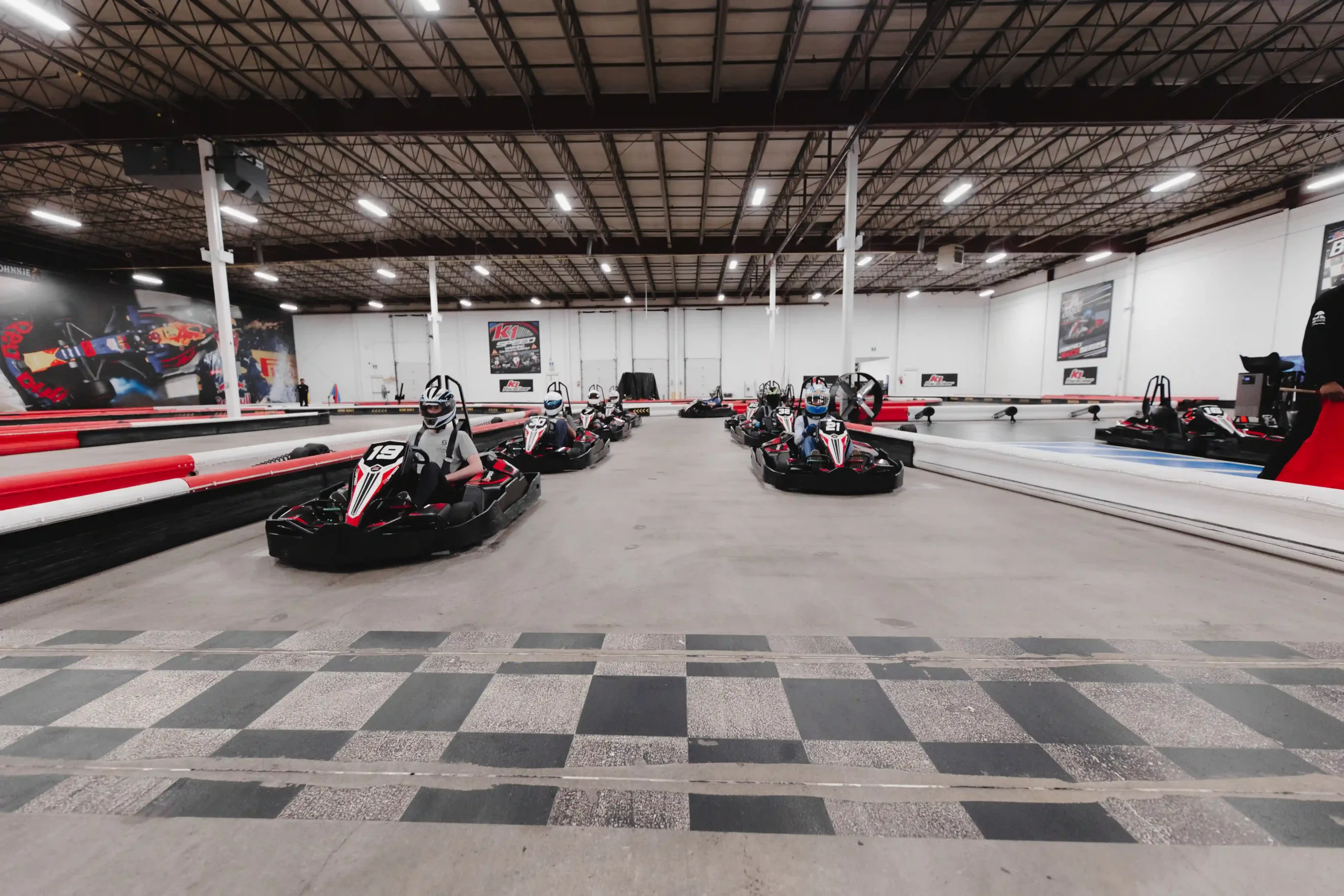
Getting to a kart racing event prepared means more than showing up on time. This guide covers what to do in the days before your event, what to bring on the day, how to navigate the event structure when you arrive, and how to debrief your performance after the session so the next event starts better than this one.
What Is the Journey from Recreational Driver to Race Event Participant?
Attending a competitive karting event for the first time is a different experience from arriving for a standard arrive and drive session. A race event has a published schedule, a defined entry list, a qualifying format, and a final race with a posted result. Each of those elements requires a different level of preparation than a walk-in recreational session where the only decision is which time slot to book.
The shift from recreational to event racing also changes the mental context of the day. You are no longer competing against your own lap time in isolation. You are competing against a specific field of drivers you can look up in advance, on a circuit whose layout you should know before you arrive. That preparation starts days before departure, not in the paddock lounge.
K1 Speed Ontario runs structured competitive events including the Challenge GP and Constructors Cup across all four Ontario locations. Understanding how each program works before you register is covered in the competitive events guide. This post picks up where that guide ends, covering the practical logistics of actually showing up prepared.
What Should You Do in the Days Before the Event?
Confirm Your Registration and Session Time
Registration confirmation for K1 Speed competitive events arrives by email. Print or save it to your phone before the event day. The confirmation typically includes your session time, the event format, and any check-in requirements specific to that event. Arriving without your confirmation at an event with a full entry list creates an avoidable delay at the check-in desk.
Also confirm the specific location. K1 Speed runs events across Toronto, Mississauga, and Cambridge. All four facilities run the same electric kart specifications and circuit format, but they are on different sites. Confirming the address in advance rather than defaulting to a previously visited location avoids the most common event-day logistics error.
Review the Circuit Layout
K1 Speed's racing tips resource includes circuit-specific guidance. Reviewing the track layout before you arrive lets you walk into qualifying with a mental map of the braking points, the apex positions, and the corners where overtaking is realistically possible. A driver who arrives at qualifying without circuit knowledge is spending their first few laps on learning curve time rather than competitive lap time.
If you have prior session data at that specific location in your race account, review your sector times from previous visits. Identify the one or two sectors where you are consistently losing the most time relative to your personal best. Those become your technical focus for qualifying.
Prepare Your Equipment and Clothing
K1 Speed provides certified helmets and neck braces at no cost, so dedicated racing headgear is not required. What you must bring yourself is closed-toe footwear. For a competitive event where you will be in and out of the kart multiple times across qualifying and the final, footwear that stays secure and flat is more practical than thick-soled or high-cut alternatives.
Clothing choice affects comfort across an extended event day. Thin, form-fitting layers work better in a kart than bulky jackets or hooded garments that bunch under the neck brace. Long hair should be tied back before putting on a helmet. Arriving with this already done rather than managing it at the helmet station saves time during the pre-session equipment process.
If you track your session data, bring something to record notes with. Paper is reliable. A post-qualifying note on your subjective feel for the circuit, the condition of specific corners, and where you felt you lost the most time gives you reference material for adjusting your approach in the final race.
What Happens When You Arrive at a K1 Speed Race Event?
Check-In and Registration
Arrive at your K1 Speed event location with enough time to complete check-in before the session briefing begins. First-time K1 Speed drivers complete the standard safety briefing before any race session. Returning drivers with an active race account move through check-in faster. The events team at Toronto, Mississauga, and Cambridge are available from the facility opening time to assist with registration and any event-specific questions.
If you are attending as part of a team for the Constructors Cup, confirm that all team members are registered under the correct team name before the session begins. A team registration error discovered at check-in takes longer to resolve than one caught by the team organizer during the pre-event confirmation process.
Qualifying Session
Qualifying at a K1 Speed Challenge GP event is a timed session where your fastest single lap determines your grid position for the final. The objective during qualifying is not to lead the session from the first lap. It is to build to your fastest consistent lap across the session while managing the traffic of other drivers doing the same thing.
The first lap of qualifying should be used to confirm your braking references on the actual circuit rather than to post an immediate fast time. Track conditions on the day, the behavior of the kart during the warm-up lap, and the positioning of other drivers on your first timed lap all provide information that is more valuable for setting up your quickest laps than the time you lose on lap one by driving conservatively.
If you make a significant error on a timed lap, do not attempt to salvage it by overdriving the remaining corners. Back off the pace for that lap, reset your approach, and use the following lap to apply what the error revealed about the corner where it happened. A composed recovery lap typically produces a faster subsequent time than a desperate attempt to recover on the same lap.
The Final Race
The final race at a Challenge GP event starts from the grid position your qualifying lap time earned. Your strategic objective in the final changes depending on where you start. A front-row qualifier is managing the gap to the driver behind and protecting a track position already earned. A mid-field qualifier is looking for clean overtaking opportunities at the end of the main straight and at the late braking zones of the slowest corners.
Contact between karts is prohibited throughout the final and is enforced by race marshals at multiple circuit positions. Deliberate contact results in a penalty or removal from the session. Competitive pressure in a final can make the no-contact rule feel frustrating in close racing, but the drivers who consistently produce clean overtakes build a competitive reputation over a season of events that pushes drivers who rely on contact to the margin of the competitive field.
Drivers who participate in the Constructors Cup format race as part of a named team across multiple sessions. The final race in a Constructors Cup round contributes to the team's cumulative standing. Each driver's result affects the team's position in the overall championship, which adds a strategic layer beyond individual race placement.
How Should You Debrief After the Event?
Review Your Race Account Data
K1 Speed stores your qualifying and race lap times in your personal race account. Reviewing this data within 24 hours of the event while your on-track experience is still recent gives you the most accurate connection between what you felt during the session and what the data confirms or contradicts. A lap that felt fast but does not appear in your personal best list is a common finding and usually reveals a corner where subjective feel and actual time are disconnected.
Compare your qualifying time to the event field. The gap between your best qualifying lap and the pole position time shows you the total available lap time you did not access. Sector data narrows that gap down to specific sections of the circuit. Identifying whether you are losing the majority of your time in one sector or distributing losses evenly across the whole circuit determines what your technical focus should be before the next event.
Set One Objective for the Next Event
The most effective post-event practice is to define one specific technical improvement objective before the next session. Arriving at an arrive and drive session with a defined goal based on your event debrief is more productive than arriving with a general intention to go faster. The transition from event to event at K1 Speed works best when each event produces one clear action item that shapes the practice sessions between it and the next competitive entry.
Drivers who want a structured methodology for building from that objective across practice sessions can find the full training framework in the kart racing training guide. This post covers the logistics of attending the event. That guide covers the work between events.
What Should Drivers New to Competitive Events Know Before Their First Entry?
The most common mistake first-time event participants make is treating qualifying as a warm-up. Qualifying is competitive from the first timed lap. Every lap in qualifying contributes to your grid position unless it is explicitly invalidated by a flag situation. The driver who treats the first few qualifying laps as an orientation session and builds to their fastest time by the last lap will almost always out-qualify the driver who pushes from lap one and produces inconsistent times throughout the session.
Nerves on an event day are normal and are not a reliable indicator of how the session will go. Drivers who channel pre-event nerves into specific technical focus rather than general anxiety about their result tend to settle into the session faster. Having a defined qualifying objective to execute provides a direction for that focus that race result anxiety does not.
K1 Speed's event community at all four Ontario locations is competitive but accessible. Drivers at their first Challenge GP or Constructors Cup entry will race alongside experienced competitors and will have access to the same race account data after the session. Using that data honestly as a development tool, rather than as a measure of self-worth relative to more experienced drivers, is the mindset that produces sustained improvement across a full season of events. For a full picture of what each competitive program involves, the competitive events guide covers every format in detail.
Frequently Asked Questions
1. How early should I arrive at a K1 Speed race event?
Arriving 20 to 30 minutes before your session time is sufficient for returning drivers with an active race account. First-time K1 Speed drivers should allow 40 to 45 minutes to complete the safety briefing before the event session begins. For team events under the Constructors Cup format, the team organizer should arrive first to confirm all team members are registered correctly before the rest of the group checks in.
2. Can I watch qualifying before my session to learn the circuit?
Yes. K1 Speed's paddock lounge at each Ontario location provides viewing access to the circuit throughout the event day. Watching qualifying sessions before your own provides practical circuit information including which corners produce the most position changes, where the leading drivers are braking relative to the track markers, and which sections of the circuit carry the most variation between drivers. This observation is most useful when combined with prior review of the circuit layout rather than as a substitute for it.
3. What happens if I miss my qualifying window at a K1 Speed event?
Missing your qualifying window typically results in a grid position at the back of the final race field rather than disqualification from the final. Confirm the specific event rules with the K1 Speed events team at your location before the day. If you anticipate arriving after the qualifying window opens, contact the events team in advance. Some event formats have flexibility in qualifying scheduling that is only accessible if the team knows about the situation beforehand rather than discovering it at check-in.
4. How do I read my post-event lap data to prepare for the next event?
Your race account at K1 Speed stores sector-level timing for every qualifying and race lap. The most useful post-event analysis compares your fastest qualifying sector times against the session leaders sector by sector rather than only comparing total lap times. A one-second deficit split evenly across three sectors requires a different technical response than the same one-second deficit concentrated in one corner sequence. The full methodology for translating this data into targeted practice objectives is covered in the racing training guide.
The Gap Between Knowing and Doing Closes on Event Day
Preparation for a kart racing event is the part of competitive motorsport that most recreational drivers underestimate. The technical development that happens between events, the logistical preparation in the days before departure, and the structured debrief after the session are what separate drivers who improve across a season from those who produce the same result at every event.
K1 Speed's competitive programs across Ontario provide the event structure. The preparation that makes those events productive is what each driver brings to the grid. Arriving prepared, racing with a defined technical objective, and debriefing honestly afterward is the cycle that makes each K1 Speed event worth more than the session time it occupies.
Register for Your Next K1 Speed Race Event
Check the current event schedule for the Challenge GP and Constructors Cup at K1 Speed Ontario. Visit your nearest location in Toronto, Mississauga, or Cambridge to confirm upcoming event dates and register. The arrive and drive format between events keeps your circuit knowledge current and your lap times moving in the right direction.
Key Takeaways
- A competitive karting event requires preparation that starts days before departure, not at the facility on race day.
- Confirm your registration, the exact location address, and your session time before the event day to avoid the most common check-in issues.
- Reviewing the circuit layout and your prior session sector data before qualifying gives you a technical focus to execute rather than a general intention to go faster.
- Qualifying is competitive from the first timed lap. Use the first lap to confirm braking references, then build to your fastest consistent time across the remaining laps.
- Post-event debrief using race account sector data within 24 hours of the session produces the most accurate connection between on-track experience and data findings.
- Defining one specific technical improvement objective after each event and building practice sessions around it is the cycle that produces sustained improvement across a full season.
BLOG | CONTACT | FAQs | RULES | CAREERS | BOOK ONLINE | GIFT CARDS
© K1 SPEED, INC. ALL RIGHTS RESERVED